
Why I Spoke at the MAHA Institute’s Mental Health & Overmedicalization Summit by Kristopher Kaliebe, MD
The opinions expressed in this guest post are those of the author alone and do not necessarily represent the views, positions, or editorial stance of Inner Compass Initiative, its staff, advisors, or affiliated initiatives.
Toward a More Contextual, High-Value Mental Health System
by Kristopher Kaliebe, MD
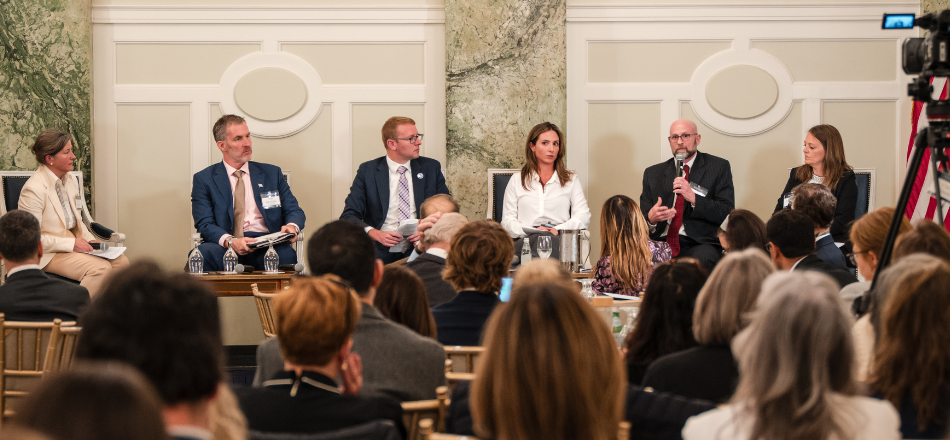
On May 4, 2026, I stood before colleagues, policymakers, clinicians, and advocates at the MAHA Institute’s Mental Health and Overmedicalization Summit in Washington, DC. As a board-certified psychiatrist with decades of experience in university clinics, Federally Qualified Health Centers (FQHCs), and juvenile corrections, I was invited to speak because the current mental health paradigm—our heavy reliance on psychiatric drugs as first-line treatment—has clear limitations.
I spoke not to reject the field I love, but to urge reform: a shift toward root-cause understanding, informed consent, deprescribing where appropriate, and systems that prioritize long-term functional recovery over short-term symptom checklists.
This is not a new concern for me. In my clinical practice and scholarship, I have repeatedly seen how well-intentioned interventions can drift into naive interventionalism. Nassim Nicholas Taleb warns that “the fragility of systems increases with intervention,"1 especially when we impose rigid models on complex, dynamic realities.
Our diagnostic frameworks, particularly the use of the DSM diagnostic categories, may seem elegant on paper; but when they take on a life of their own, they can medicalize ordinary human struggles, expose children to unnecessary risks, and crowd out the contextual, practical responses that actually build resilience.
I spoke at the summit because policy efforts like the HHS action plan and advocacy organizations like Inner Compass Initiative and MAHA Institute offer a rare policy window to correct course toward humility, empiricism, and systems that make people physically and mentally robust.
The Crisis of Overmedicalization in Mental Health
Rising psychiatric prescribing rates - especially among children and adolescents - polypharmacy, and the limited long-term efficacy data for many medications are now well-documented. In my own work across diverse settings I have witnessed both the acute benefits some patients receive and the iatrogenic harms that can follow: withdrawal difficulties, emotional blunting, metabolic effects, and diminished natural resilience when medications become the default (rather than one tool among many).
We can and must reform our systems. In 2017, I wrote what change looked like on the ground at Federally Qualified Health Centers (FQHC). FQHC teams are overwhelmed by complex cases amid limited onsite services and scarce local referrals. The majority of mental health problems seen in primary care arise from “standard human struggles compounded by toxic stress, harsh environments, and limited opportunities.”
Yet our system too often defaults to symptom-diagnosis-pill pathways that overlook social determinants, lifestyle, and family context.
In 2014, I raised concern about how diseases of civilization (in this case childhood obesity) required a demedicalized approach. I showed how heuristics (practical mental shortcuts) can cut through complexity. The same principle applies to mental health: when environments promote sedentary behavior, ultra-processed diets, and constant digital stimulation, symptoms of inattention, irritability, and low mood often follow. These are not always discreet diseases; they are signals that the ecosystem needs attention.
More recently, my work on digital distraction and attentional literacy highlights how smartphones, social media, and algorithmic misinformation create “digital disarray”: a state of heightened distraction, information overload, and eroded trust that undermines focus, sleep, relationships, and emotional regulation. Children’s developing brains are especially vulnerable; what looks like ADHD or anxiety may partly reflect an attentional environment engineered for engagement rather than flourishing.
These patterns are not failures of compassion or effort. They reflect a system shaped by availability heuristics (what is measured and marketed becomes “real”), representativeness (matching symptoms to prototypes while ignoring base rates and context), and narrative fallacy (coherent stories like “chemical imbalance” that simplify messy biopsychosocial reality).
The result is overdiagnosis and overmedicalization—fragile interventions that are naive because they do not account for the antifragile nature of human development.
Why I Chose to Speak: Core Motivations
I chose to speak because psychiatry can - and must - do better. Medications have a targeted role when used thoughtfully, but they certainly are not panaceas. The evidence gaps around long-term use, withdrawal, and iatrogenic harm demand intellectual honesty. This is especially true regarding our most vulnerable populations, such as children in foster care.
At the summit, I emphasized patient-centered informed consent—the principle at the heart of the Inner Compass Initiative. Families deserve full information about risks, benefits, alternatives, and tapering, not just the promise of quick relief.
My clinical realism comes from the front lines. In FQHCs, I have seen how a biopsychosocial case formulation—rooted in life history, family systems, lifestyle, and environment—yields better functional outcomes than a focus on symptom checklists. Positive relationships heal. Empathy, goal-sharing, and the therapeutic alliance matter.
Yet many caregivers cannot participate in intensive family therapy due to transportation, work, or their own health struggles. System-wide resources for family support are essential; but creative, low-barrier FQHC programs (therapist-monitored infant play groups, yoga, family walks that “stack” socialization, exercise, and connection) can make a difference. Community-based social prescribing holds promise to bridge these gaps.
My view is that mental health is inseparable from physical health. Heavily processed diets, sedentary lifestyles, and sensory overload from electronics negatively affect mood, learning, behavior, and brain health. My “Rules of Thumb” offer simple, actionable heuristics parents can actually use: Eat Food (real, minimally processed whole foods), Get Up and Move (humans are built to walk and run; sitting is the new smoking), and Honor Silence (limit media hyper-reality, protect sleep, and reduce advertising-driven desires). These are not fads; they are antifragile strategies that build robustness.
We experts must practice humility. Our diagnostic and pharmacological models are maps - not the territory. When treating them as absolute truths, we risk naive interventionism and iatrogenic harm.
Instead, let us build robust, context-informed systems that support families where they live. Most antidepressants are prescribed not by psychiatrists, but by non-specialists such as primary care physicians. If we want to improve mental health and reduce inappropriate prescriptions, we need to better support primary care systems.
A promising path forward may involve greater investment in, expansion of, and improvements to FQHCs. These centers already represent an important and relatively cost-efficient part of the medical system, and strengthening them could help improve access to more integrated forms of care over time.
FQHCs may also offer useful settings for experimenting with new practice models, particularly approaches focused on problem-solving, prevention, and overall functioning rather than diagnosis or medication alone. Collaborative care models, rather than relying exclusively on traditional specialist-based treatment, could also help extend mental health expertise more broadly within primary care settings.
At the same time, greater emphasis on lifestyle foundations, resilience, and attentional health may help support a broader cultural shift toward healthier engagement with mental health in the digital age.
I do not find this to be an ideological argument; I find it to be one relying on pragmatic, evidence-aligned, non-partisan efforts while remaining true to our humanity. These efforts honor the therapeutic alliance, respect human complexity, and prioritize functional recovery — relationships, school, work, and purpose.
I spoke at the Mental Health and Overmedicalization Summit because I believe we can create a mental health system that heals rather than merely labels, that builds antifragility rather than fragility, and that expands care to those most in need.
The time is now. Let us seize it—together.
The opinions expressed in this guest post are those of the author alone and do not necessarily represent the views, positions, or editorial stance of Inner Compass Initiative, its staff, advisors, or affiliated initiatives.
1 Taleb, N. N. (2012). Antifragile: Things that gain from disorder. Random House.
References (APA 7th Edition)
Kaliebe, K. (2014). Rules of thumb: Three simple ideas for overcoming the complex problem of childhood obesity. Journal of the American Academy of Child & Adolescent Psychiatry, 53(4), 385–387. https://doi.org/10.1016/j.jaac.2013.12.016
Kaliebe, K. E. (2016). The future of psychiatric collaboration in federally qualified health centers. Psychiatric Services. Advance online publication. https://doi.org/10.1176/appi.ps.201500419
Kaliebe, K. E. (2017). Expanding our reach: Integrating child and adolescent psychiatry into primary care at federally qualified health centers. Journal of the American Academy of Child & Adolescent Psychiatry, 56(11), 907–909. https://doi.org/10.1016/j.jaac.2017.08.010
Kaliebe, K., & Shah, K. (2024). Digital distractions and misinformation. Pediatric Clinics of North America. Advance online publication. https://doi.org/10.1016/j.pcl.2024.08.002
Taleb, N. N. (2007). The black swan: The impact of the highly improbable. Random House.
Taleb, N. N. (2012). Antifragile: Things that gain from disorder. Random House.
Optional additions (if you wish to expand the reference list in the published article):
Wissow, L. S., Anthony, B., Brown, J., Diamond, G., Grasmick, K., & Jellinek, M. (2008). A common factors approach to improving the mental health capacity of pediatric primary care. Administration and Policy in Mental Health and Mental Health Services Research, 35(4), 305–318. https://doi.org/10.1007/s10488-008-0172-0
Walsh, R. (2011). Lifestyle and mental health. American Psychologist, 66(7), 579–592. https://doi.org/10.1037/a0021769
- Log in or join one of our Connect networks to comment