
Once You Open Your Eyes to Truth, You Can’t Unsee

“We believe that expertise doesn’t always come from formal education, training, or licensure.”
The above is one of Inner Compass’s guiding principles. It resonates with me because—despite being a medical doctor myself—I still fell for the mainstream mantra that antidepressants are “safe and effective.”
Sadly, it took decades to find out the truth and to find myself again. This is my story.
From the age of nine, I was sent thousands of miles away from home to boarding school, which I endured for eight miserable years. It was very traumatic, and in order to survive, I learned to bury my feelings. This coping strategy served me well for many years.
I made it through a demanding medical training, became a wife and mother of four, and began working 80–120 hours a week as a junior doctor in the UK.
Until it didn’t.
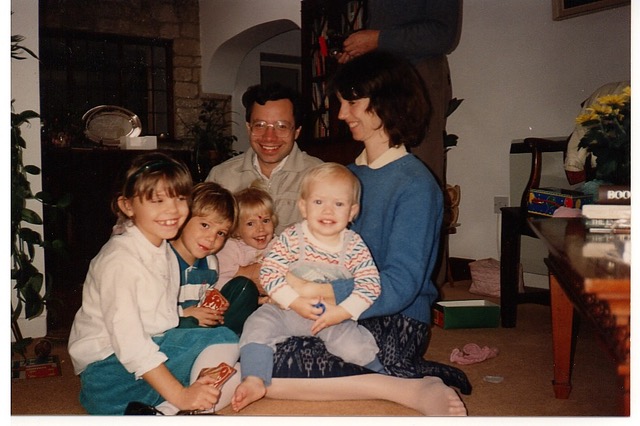
By age 34, I was utterly exhausted. My husband and I had chosen to swap traditional roles: I was the breadwinner for our family. I was working as a doctor in the ER while trying to be a loving wife and a good mom to our four children. But being suddenly confronted by memories from my own childhood precipitated an emotional crisis.
“At that time, mental illness was widely believed to be caused by a chemical imbalance.”
Seeking help, I visited my GP and was diagnosed with depression. At that time, mental illness was widely believed to be caused by a chemical imbalance. It was 1994. The mainstream medical narrative did not recognize that doctors can be vulnerable to “mental breakdowns”; nor was trauma from the past recognized as a cause of what was termed “mental illness.”
Prozac had just hit the ground running, gaining widespread popularity, so that was the solution offered to me by my GP. She reassured me it was a "very safe, very effective, nonaddictive" drug that would help and that I’d feel better soon.
But the promise that my problems would be over within six weeks didn’t come to pass. Looking back, I know now that what I needed was: firstly, to rest and secondly, to receive sympathetic counseling to help me process what had happened to me as a child. Instead, I was saddled with side effects.
I stopped taking Prozac within a couple months. The true issues had not been addressed, so of course I continued to feel terrible. Innocently, I returned to my GP thinking she must be right—after all, I had all the classic signs of depression. She reiterated that I was very sick, signed me off from work, and put me on a new SSRI at a higher dose.
Before too long, I was suicidal.

It didn’t make any sense. I had a loving husband, a family, a promising career… and the next thing I knew, I was being taken to the hospital to have an assessment by a psychiatrist. My husband was told that I needed urgent admission to a psychiatric ward as I was thought to be a danger to myself.
The morning after my admission, the psychiatrist told me I needed ECT (electroconvulsive therapy). I was scared, but he reassured me that with ECT I’d get better more quickly. I trusted him because I was just a junior doctor and he was a specialist—surely he knew better than I did.
After the first ECT treatment, I woke up paralyzed. It turned out I had a rare genetic defect and could not metabolize the paralyzing drug in the anesthetic. I needed breathing support for about 20 minutes until I could breathe on my own again.
Now I had a new terror to add to the frightening ordeal of hospitalization. But the psychiatrists continued to give me ECT. And that wasn’t all. I was also started on a cocktail of different psychiatric drugs: old-school dependables like tricyclic antidepressants, a benzodiazepine, and chlorpromazine to help me sleep.
“I desperately wanted to go home and this whole ghastly episode to be over.”
I remember little because of the profound memory loss that followed the repeated ECT treatments. I only know that I was disoriented and that I desperately wanted to go home and this whole ghastly episode to be over.
I was discharged after six weeks but was not home for long because I had not really improved at all. Every time I saw the psychiatrist at his outpatient clinic, he was aware that I still had the same symptoms of depression and that I still felt suicidal. Another hospital admission was inevitable. More ECT, more drugs.
As time went on, I got worse not better.
I was offered psychotherapy but trying to talk about the past to a therapist who did not appear sympathetic while I was so numbed and sedated by the drugs just added to the feeling that nobody was listening to me.
I felt as though my life was in ruins. All my dreams had been shattered. I was no longer able to work as a doctor. I thought I was a terrible wife to my husband. Even worse, I was not at home consistently enough to look after my children. What sort of mother did that make me?

I spent the next seven years as a revolving-door patient, in and out of the hospital. Sometimes I was forcibly detained, forced to take drugs, and forced to have ECT. I had started off with suicidal thoughts. As time progressed, I began to act on these thoughts and self-harmed repeatedly.
When I look back now, I realize I didn’t want to die and leave my family, I just wanted it to stop. Sometimes my internal debilitating misery, the agitated and anguished thoughts, and the blackness of my mood felt so intolerable that I believed my family would be better off without me.
What was so weird is that, despite all that I could feel inside, I was unable to express it outwardly. I use the term “numbness,” but words are inadequate to describe what I experienced. It was as if my emotional self had been wrapped in cling film. I could feel everything inside, but there was no way of letting it out.
The psychiatrists kept telling me that I was seriously ill with a biological depression. I was told that there was something wrong with my brain. Every time they changed the doses of my drugs or added more to the cocktail, I was reassured that “this time, it will make you feel better.” I was being cared for by some of the UK’s most expert psychiatrists who specialized in “treatment-resistant depression.” I was under constant duress, but I believed that the doctors must know what they were doing.
While the system tried to “help” me by detaining me in locked hospital wards, in fact what it did was trigger my childhood trauma of being trapped at boarding school. I had nothing to do but ruminate on the nightmare my life had become and my utter failure as a mother, a wife, and a doctor.
My whole family suffered. My husband was terrified that the authorities would remove our children, and he strove to protect them not just from my absence but from the consequences of having a mother who was considered “insane” enough to be locked away. I always loved them. I never wanted to abandon them, but my inner torment felt like a living hell.
Eventually, I was put on “suicide watch” and had a nurse with me even when I visited the bathroom. Nothing made any difference.
“I was a drugged-up zombie with no ability to process complex trauma.”
The psychotherapy continued, but I was a drugged-up zombie with no ability to process complex trauma. I had undergone over 100 ECT treatments and was on “maintenance” ECT. Over the years I was prescribed many combinations of 33 different psychiatric drugs (though not all at once) with additional medication to counteract the numerous side effects.
Recently I met a fellow patient who was in the hospital with me. She told me seeing me like that was the reason she refused ECT herself!
ECT erased parts of my memory. I don’t know what I don’t know, but I have discovered that I cannot remember some of the good times from that era.
By 2001, the psychiatrists decided that I was such a hopeless case, they referred me for psychosurgery. I would have agreed to anything to stop the nightmare, and yet the nursing staff often accused me of not wanting to get better. I felt like I could not refuse the psychosurgery. If I did, then maybe I would prove the nurses right, so I agreed. I DID want to get better!
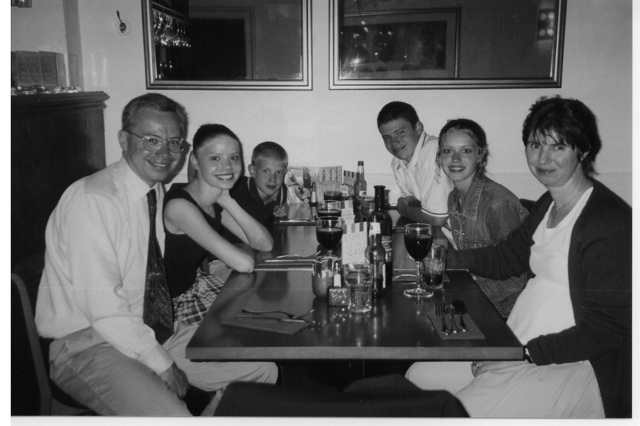
Almost seven years after it all started, I was taken 600 miles away to a specialist center where I underwent experimental stereotactic surgery. It was called a "bilateral anterior cingulotomy,” and it burned pea-sized lesions on either side of the anterior cingulate gyrus in my brain. The doctors speculated that this part of my brain was “overactive.” Nobody knew how the surgery worked or whether it worked at all. They reiterated that psychosurgery was never intended to be curative; long term it might possibly make me “well enough” to live at home rather than in the hospital.
If it were now, I would never agree to be a guinea pig for experimental, destructive brain surgery. But at the time, my cognitive function had declined significantly as a result of the ECT; I just remember being desperate to get better. Assuming they knew best, I consented to the surgery.
Afterwards, I didn’t even know what they’d done. I had been warned that I should not expect any results for at least nine months, and I was to follow a new drug regimen and engage in CBT as part of my year-long rehabilitation program. Looking back, the whole thing was totally bizarre.
But an extraordinary thing happened eight days after the surgery: a light switched on in my head. Suddenly I appeared to be fully recovered! Even the psychiatrists couldn’t explain it. They assumed it was a placebo effect of the psychosurgery because this had never happened to any other patient, either before or since. The new drug regimen prescribed to me had far fewer drugs than the eight I was on before the surgery. In retrospect, I wonder: could that have been the reason for this miraculous return to my former self? Whatever happened, I thought that God had intervened and saved me.
I still had to prove to the psychiatrists that I was no longer depressed, but without further justification to hold me in the hospital, the detention was lifted. I was allowed to go home less than three weeks later and that was the end of all support from psychiatric services other than follow-up outpatient clinics.
It wasn’t easy for my family to suddenly have me back at home; it was a terrible strain on all of us. Nobody helped us to rehabilitate, but somehow we muddled through.
“I hated being on the drugs, and I still had side effects.”
I hated being on the drugs, and I still had side effects. I wanted to stop taking all the remaining drugs, but the psychiatrist persuaded me to continue with venlafaxine at least for the next year. In fact, after a few months, I realized that venlafaxine was the cause of sexual dysfunction. Returning to normal relations with my husband, I decided I must stop venlafaxine as well. The psychiatrist could not prevent me from doing that since I was no longer a detained patient. The only advice he gave was to stop it very slowly. I found by trial and error that once I got to a low dose, I had to open the capsules and take only a very few of the beads to combat the withdrawal “brain zaps” I suffered continually. The psychiatrist acknowledged that he’d heard of other patients having similar difficulties trying to stop this drug.
I even managed to get back to work as a doctor, which at least eased our financial situation. I became determined to fight the stigma against people diagnosed with “mental health conditions.”
Slowly we found a new normal as a family.
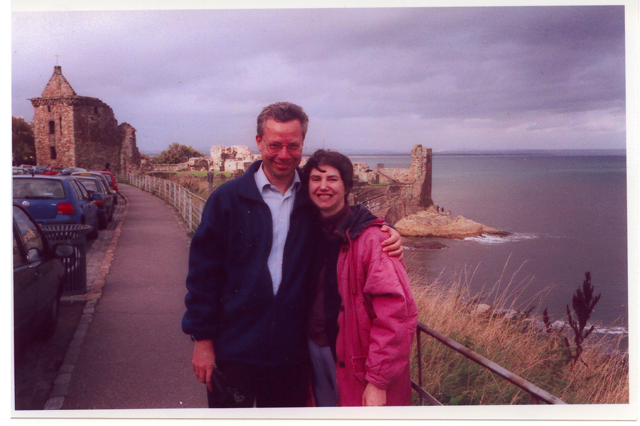
Of course, I was very curious about why I had recovered so suddenly after the surgery, especially when the psychiatrists kept telling me that it was totally unexpected. To give them their due, they made no claims that it was the psychosurgery that had made me well—although I was heralded as their star patient.
I was satisfied with the explanation of “divine intervention." However, on reflection, the thing that stands out is that before the surgery, I was taking eight psychotropic drugs, and after the surgery those were reduced to two, at lower doses. Could this have played a role in my sudden recovery?
When I was invited to write my first memoir, I felt incredibly grateful to be free from the devastating consequences of my “diagnosis” of severe, intractable treatment-resistant depression. I rationalized that psychiatry had done me a favor. I couldn’t contemplate that this had happened for no reason.
But nothing much had changed. Yes, I was off all the drugs for a couple of years. I had managed to become part of my family again and return to a stressful job again. Of course this “recovery”’ was doomed not to last—I see that clearly now.
I still hadn’t tackled the root emotional issues that had caused the first breakdown. On top of that, I had been re-traumatized by horrendous years in hospitals that resembled the captivity of boarding school. I was bullied by hospital staff who told me that I didn’t want to get better and forced me to take drugs I didn’t want to take.
In 2005, four years after the psychosurgery, I was invited to write a book about my story. Having signed a contract to get it written within a year, I started my research. I needed to access my medical records but was only allowed to do this in the company of the psychiatrist. It was at his clinic while I was gathering information that he asked how I was doing. I told him I was fine but not sleeping well. In retrospect that was hardly surprising given the fact that I was revisiting the nightmare and also working night shifts in the emergency department.
But the psychiatrist was alarmed. He frowned… and then terrified me as he explained it was a sign that the depression was returning. He immediately suggested that I needed to restart antidepressants to “nip it in the bud.”
“I was still very much in the thrall of psychiatry.”
I was still very much in the thrall of psychiatry, so I trusted him. He was the expert, in my mind. The only fight I put up was not to go straight back on venlafaxine with all its side effects. Instead, I agreed to take trazodone and to have regular reviews in his outpatient clinic.
And that was the beginning of the end of my recovery.
Not long after this, we relocated to Scotland, and as additional stressors were added to my life, I began to feel worse. The doses were raised. Within a year of the memoir being published, once again I was hospitalized and suicidal. The psychiatric system offered me the same solutions as before: more ECT plus another cocktail of psych drugs.
This time, the psychiatrist was adamant that I was never going to fully recover. He was also adamant that I must take off-license, high-dose venlafaxine. From now on my “treatment”’ was to be “relapse prevention”’ with plans in place for my inevitable next admission to the hospital. I was told I must never work again, take drugs for life, and avoid all stress.
I resigned myself to the fate of trying to live and function in a permanent drug-induced state of extreme sedation.
By this time, around 2010, all our children were adults and had left home. With the exception of a two-year break, I had been a psychiatric patient continuously for 16 years. We had just moved back to London from Scotland so that my husband could return to university to train as a psychotherapist.
Fortuitously, I saw some medical articles that broke through the fog and flipped a switch for me. They described how the drugs I was taking led to higher mortality. I was no longer suicidal, and the idea of dying young because of my prescribed “medication” did not appeal!
I immediately stopped flupentixol and then zolpidem and felt more awake and more alive as a result. Perhaps the high doses of the remaining drugs were enough to protect me from withdrawal.
“Once you open your eyes to truth, you can’t unsee.”
This was the beginning of my disillusionment with psychiatry. An awakening had begun. Once you open your eyes to truth, you can’t unsee.
I began to question, and then distrust, the psychiatrists’ opinions. Whatever side effect I reported, I was told it was my “illness,” my brain problem.
Before we emigrated to the United States to join our son in 2016, I had already started to slowly wean myself off the remaining antidepressants. I didn’t know about hyperbolic tapering, but by trial and error I found I had to make tiny, tiny decreases in the doses. In Colorado, I shaved bits off the tablets.
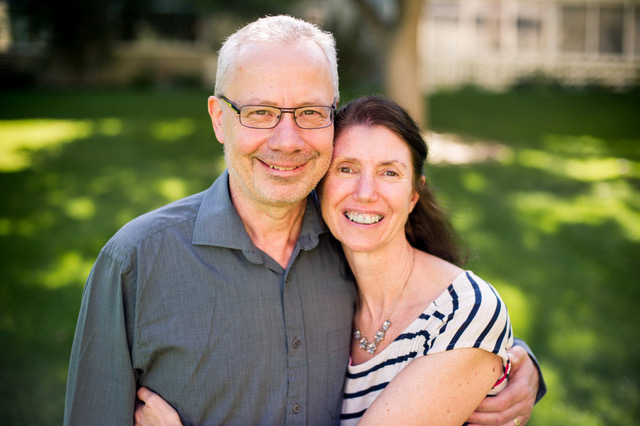
As the drug effects decreased, my emotions came alive! Admittedly, they were extreme, but I’d spent years in this fog feeling that the world was unreal. Now it gave me a thrill to feel again.
I was getting my life back! I enjoyed sex for the first time in over a decade. I laughed, I cried, I got angry and irritable. I put up with feeling achy and not sleeping and brain zaps. Perhaps it was a good thing I didn’t know much about withdrawal. The numerous symptoms I experienced during that time might have worried me more if I had known.
I can now fully inhabit my emotions in a way I wasn’t capable of in the past. I have discovered that emotions are neither good nor bad but rather help us navigate life. Feeling low as a young mother was entirely appropriate. I was never broken nor crazy. I need not be afraid of my feelings now, even when they are extreme.
It wasn’t easy when we found ourselves having to return to the UK. I had to get back to work as an emergency physician.
Before we left Denver, I needed surgery on my foot. I chose this time to finally ditch the last small dose of trazodone, while I was sleepy from the anesthetic. The rebound insomnia was the least of my problems when I was suddenly hit with a severe burning, tingling pain, later diagnosed as neuropathy. It started in the operated foot but became bilateral several months later. When I researched this phenomenon, I became convinced that it was indeed a protracted withdrawal syndrome, although the neurologist did not agree.
I still have burning feet, which are only relieved by cold water or ice packs. I would never advise anyone to stop their drugs suddenly, even from a low dose as I did.
Back in the UK I was hit with an inordinate amount of stress due to working all through the pandemic. A former version of myself would have crumbled. But not this time. Every time I face life’s difficulties (and there have been many of those in recent years), now I choose to honor my emotions.
I began seeing a therapist. For the very first time, my childhood traumas were validated, and I started to process all the bad things that had happened to me over the years. This is what I had needed all those years ago as a young mother and junior doctor in crisis.
It felt like everything I had believed was unravelling. I had plenty to think about as I came to terms with the fact that years of my life, and that of my family, had been robbed by the lies that I had a chemical imbalance and a faulty brain. I became convinced that if only I had been listened to, if only I had not had my legitimate distress medicalized, we would have been spared the nightmare that followed.
I discovered that I was not the only one who had lived through similar ordeals created by my own medical profession. It was difficult to keep a balanced perspective. There were times when I felt so angry, and I wanted to blame them all. Other times I felt so guilty that I had failed to see the truth earlier in my life.
I have had to come to terms with the fact that I cannot change the past. I have had to accept my story as it is and to move forward with my life. I do get to choose my future.
I can honestly say that emotionally I have never felt better. I believe it’s because I finally faced my inner traumas and achieved deep root-cause healing. I reconnected to myself; I found my inner compass. That has freed me to live fully again! Of course, I have my ups and downs, but now I see this as normal.
I go to dance classes twice a week, I swim, I cycle. I read many books, and I am writing a novel. I know that when life is tough, I need to do more of what I enjoy, not less. I also know that it is important to listen to what my body is saying. I accept that it’s appropriate to react to situations and circumstances with feelings of sadness, distress, anger, or irritation—as well as joy or tranquillity.
Of course I have regrets. It’s only natural. If only I’d known. If only my GP had known. Perhaps then my family and I would have been spared our own versions of hell and it would have given me another 15 years in the workplace.
But I cannot turn the clock back. What I can do is share my story.
In February 2025, my memoir Unshackled Mind: A Doctor’s Journey of Trauma, Liberation and Healing was published. My first memoir, Life After Darkness: A Doctor’s Journey Through Severe Depression, is still available for sale because the publisher owns the rights to the book. It was important for me to “correct” the perspectives in that book with the way I see things now, after having evolved and grown.
I invite you to read Unshackled Mind in its entirety and spread the word. My hope is that I might help prevent others from going through the unnecessary suffering that accompanies living entrenched in a psychiatric system that does not work.
Topmost photo by Brett Jordan on Unsplash.